Meet the Little Trucks Running America's Farmers Markets
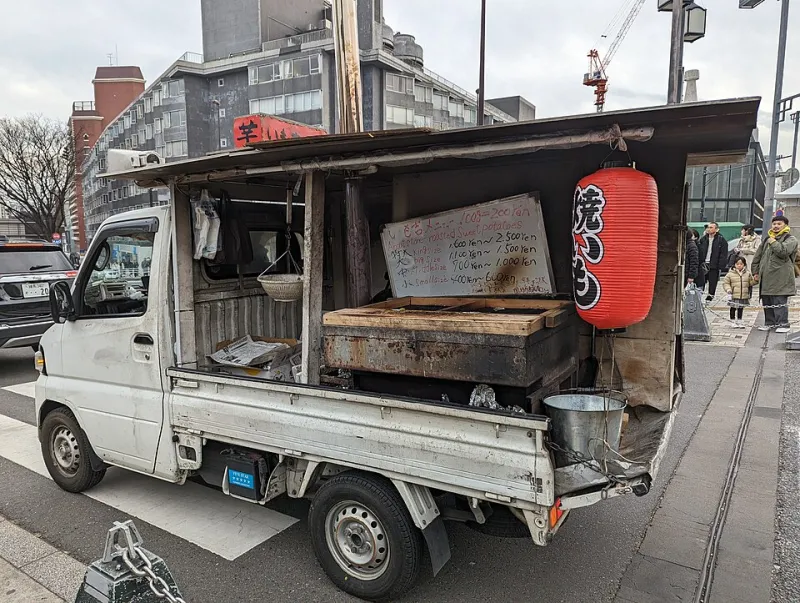
Photo: Syced, CC0, via Wikimedia Commons
Walk the aisles of just about any farmers market outside a major American city these days and you'll spot it: a tiny flatbed truck, barely bigger than a riding mower, loaded with pumpkins, flower buckets, or a couple of kegs. The badge on the grille might say Honda. The steering wheel is on the wrong side. And the owner will happily tell you it's the best vehicle purchase they've ever made.
The Honda Acty — a kei-class mini truck built for Japan's narrow farm roads — has become the unofficial vehicle of the small-scale American food movement. And having spent years around these trucks at our Kita-Kanto dealerships, where many of them were originally sold to Gunma and Tochigi farmers, we're not surprised.
Why a Truck Smaller Than a Golf Cart Makes Sense
The Acty measures roughly 11 feet long and is powered by a three-cylinder engine displacing just 660cc. That sounds like a toy until you watch one carry 800-plus pounds of compost up a muddy orchard lane.
"I was burning diesel idling around my five acres in a three-quarter-ton pickup," says Dana Whitfield, who runs a cut-flower operation outside Asheville, North Carolina. "Now the F-250 stays parked except for real towing days. The Acty does everything else — seedling trays to the high tunnel, buckets to the cooler, buckets to the market. It's maybe $12 to fill the tank."
That's the core of the appeal for small farms, breweries, nurseries, and market vendors: most of the work a truck does on a small operation doesn't require a truck bed six feet off the ground. The Acty's bed sits at knee height, which means loading flats of tomatoes or a pallet jack's worth of cider cases is easy on the back.
The Rules of the Road (and the Rules Off It)
Here's where we have to be honest, because our site is full of import paperwork talk: these are 25-year-import-rule vehicles, and their street-legal status varies state to state. Most owners register them as low-speed vehicles or off-road/farm-use machines, which means no highway cruising. Top speed on a healthy Acty is around 65-70 mph, but you really don't want to do it.
"I take the back road to market — 25 minutes, 40 mph the whole way," says Miguel Ortega, who sells roasted chiles at markets around Santa Fe. "Never once wished I could take the interstate. That's not what this truck is for."
Some states are friendlier than others, so before you wire any money to a Japanese exporter, check your state's title rules for mini trucks. We've written plenty about that paperwork maze elsewhere on this site.
Acty vs. Golf Cart vs. Full-Size Pickup
Every owner we hear from has run the same comparison, and it usually comes out like this:
- Versus a golf cart: The Acty has an actual cab with heat (important in Minnesota and Vermont), a real bed, and four-wheel drive. Golf carts don't haul hay bales.
- Versus a full-size pickup: The pickup wins if you tow or highway-drive. For everything else — orchards, greenhouses, market stalls, campus and brewery grounds — it's overkill that costs three times as much to run.
- Versus a UTV: Comparable capability, but the Acty is cheaper used, has doors and a windshield, and doesn't scream "recreational."
"Our brewery uses it to move kegs from the loading dock to the taproom and to haul grain sacks," says a co-owner of a Wisconsin farm brewery. "Guests love it. It's become a mascot. We named it Hiroshi."
Born on Farms Like Yours
There's a nice symmetry to all this. The Acty was designed in Japan for exactly the buyer who loves it now in America: a small farmer who needs a nimble, cheap, dependable hauler for short trips on rough ground. Many of the trucks crossing the Pacific came off rice paddies and tea fields in Gunma and Tochigi — the very heart of Honda country, where our dealerships have been servicing them for decades.
The Japanese farmers who owned them followed strict shaken inspection schedules, which is why so many 25-year-old Actys arrive with clean underbodies and honest mileage. Rust from road salt is the main thing to inspect, along with a tired timing belt and leaky shock mounts.
The Bottom Line
If your operation lives below 40 mph and under 25 miles from home, a used Honda Acty might be the most sensible vehicle decision you make this decade. Just budget for shipping, check your state's registration rules, and buy from a seller who documents the truck's history — a practice, we can confirm, that Japanese sellers take very seriously.
And if you ever find yourself in Kita-Kanto, stop by. We'll show you where these little trucks came from — and maybe sell you one to ship home.