What Those Little Green Plates Actually Tell You: A Buyer's Field Guide to Japanese Registration Tags
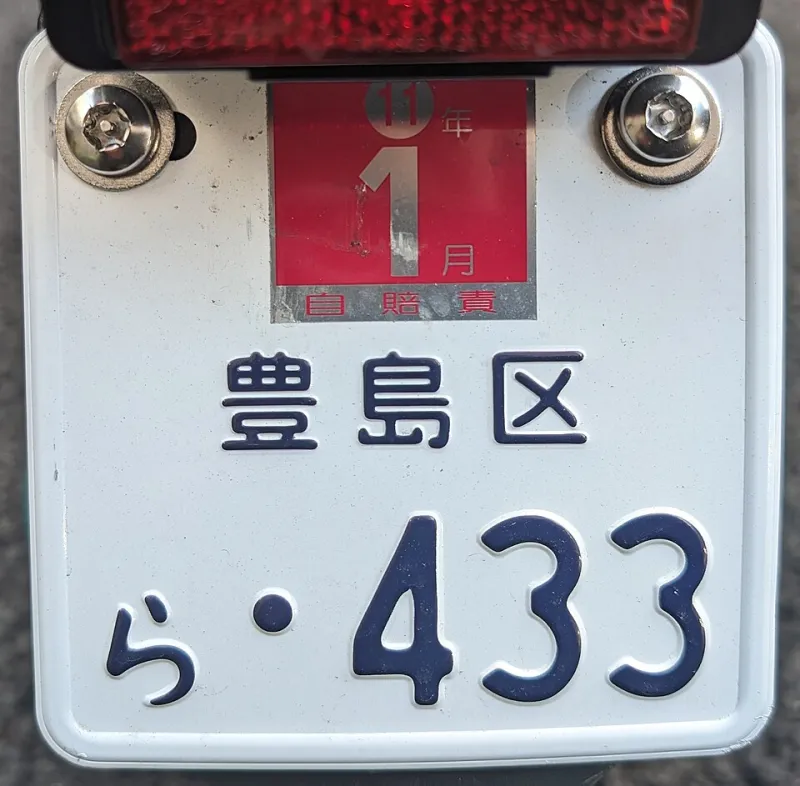
Photo: SuFlyer, CC0, via Wikimedia Commons
Picture this: you're three time zones into a late-night scroll through a Kita-Kanto dealer's used inventory, and you've found it — a clean Honda Fit with photos that look almost too good. The price is right. The mileage looks sane. But there's one detail you keep skipping past: the license plate.
Don't. In Japan, that little green (or yellow, or white) rectangle is basically a car's LinkedIn profile. Read it correctly, and you'll know roughly where the car has lived, how old it is, and whether the seller's story holds water. Here's how to decode it before you commit.
The Geography Lesson Hiding in Plain Sight
The first section of a Japanese plate is a place name — and unlike American plates, it's not a state slogan. It's the specific land transport office that registered the vehicle. If you're shopping with dealers in our neck of the woods, you'll see the usual suspects:
- Gunma (群馬) — our home turf, and the birthplace of many a Honda
- Tochigi (栃木) — next door, home to some serious automotive heritage
- Ibaraki (茨城) — flat roads, plenty of commuters
- Saitama (さいたま) — the suburban sprawl just north of Tokyo
Why does this matter to a buyer in Ohio or Oregon? Because a car registered in Saitama has spent its life in dense suburban traffic, while a Gunma-registered vehicle may have enjoyed hillier, less congested roads. Rust patterns, brake wear, and even air conditioning hours all tell different stories depending on where that plate was issued. A Yokohama-plated city car and a Gunma-plated one are two very different used cars, even with identical odometers.
Color-Coded History
The plate's color is a quick-and-dirty age and size check:
- White with green text — standard passenger cars, the most common sight
- Yellow with black text — kei cars and kei trucks, the 660cc heroes we've covered before
- Green with white text — commercial vehicles, including many kei trucks badged for work
There's a practical angle here for importers: kei vehicles wear their classification right on the plate, so you can instantly confirm that the "Acty" you're eyeing is genuinely a kei truck and not a mislabeled listing.
The Number That Speaks Volumes
Here's the part that trips up first-time importers. After the region name and a small classification number, you'll see a two-digit code followed by the registration number itself. That two-digit code is a series number, and 0-series plates (like 00) are reserved for brand-new registrations.
So if a seller claims a car is "one owner, low miles," but the plate shows a high series number, that's not necessarily a red flag — plates get reissued when a car changes regions or its registration lapses. But a 0-series plate on a car marketed as "fresh import, never registered" is a good sign the story checks out. Conversely, a dealer who can't explain the plate versus the paperwork is a dealer to walk away from.
Cross-Checking the Paper Trail
The plate is just the public face. The real verification happens with two documents any reputable Kita-Kanto dealer will happily show you:
- The shakensho (vehicle registration certificate) — matches the plate number, region, and owner history
- The shaken记录 (inspection records) — a timestamped mileage history at every mandatory inspection, which makes odometer fraud nearly impossible in Japan
This is honestly one of the best-kept secrets of buying from Japan: the inspection system creates a paper trail that would make a Carfax weep. Ask your dealer for the inspection history printout. If they produce it in minutes, you're dealing with professionals.
Three Questions to Ask Before You Buy
When you're negotiating remotely with a Kita-Kanto dealer, put these on your list:
- "What region was the car registered in for most of its life?" (Snow-belt regions mean more undercarriage salt exposure — yes, Japan uses road salt too.)
- "Can you send a photo of the plate next to the shakensho?" (Two minutes of work; a legit dealer does it without sighing.)
- "What's the mileage at the most recent shaken inspection?" (Then compare it to the odometer photo.)
None of this is complicated. It's just a system most American buyers have never been handed the decoder ring for.
The Bottom Line
A Japanese license plate won't tell you whether the previous owner drove like a maniac. But it will tell you where the car lived, roughly how it was classified, and whether the paperwork matches the pitch. Combined with Japan's inspection history, it's one of the strongest verification tools in the used-import game — and it's sitting right there in every listing photo.
Next time you're browsing our inventory at 2 a.m. your time, squint at the plate. It's saying more than you think.