The Space Between the Lines: What Happens When Your Van Fits Where Escalades Don't
There's a quiet war happening in every parking garage from Seattle to Boston, and most of us are losing it. You know the drill: you find a spot that technically exists, ease in with your mirrors folded, and then exhale through the two-inch gap between your door and the neighboring RAM 2500. Opening the door fully? That's a luxury now.
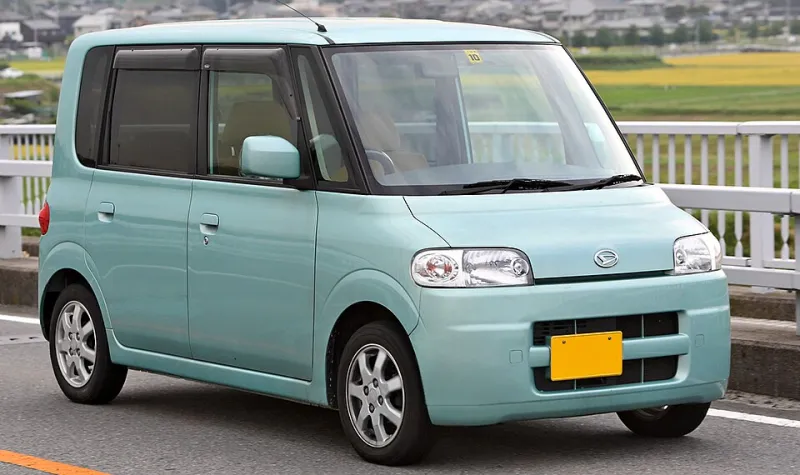
Meanwhile, in a showroom in Kita-Kanto, Japan, there's a boxy little van that treats this entire predicament as a joke. The Honda N-BOX doesn't just survive tight parking — it was practically designed around it. And as American cities aggressively downsize their parking real estate, we'd argue it might be the most rational vehicle you can buy.
The Numbers Don't Lie (But They Do Embarrass)
Let's talk measurements, because this is where the argument gets uncomfortable for anyone driving something with three rows.
A standard US parking space has historically hovered around 8.5 to 9 feet wide. But cities are revising those numbers downward. Philadelphia now permits spots as narrow as 7.5 feet in certain zones. Seattle and San Francisco have both approved layouts with compact spaces at 7.5 feet or less. Some older Boston garages — built when a Chevy Bel Air was the big rig on the road — run tighter than that in practice.
Now stack vehicles against those lines:
- Honda N-BOX: about 4.9 feet wide, 10.8 feet long
- Honda CR-V: roughly 6.1 feet wide, 15 feet long
- Chevrolet Tahoe: about 6.75 feet wide, 17.4 feet long
- Cadillac Escalade: pushing 6.8 feet wide, over 17.5 feet long
Do the arithmetic. In a 7.5-foot space, an Escalade leaves you roughly four inches per side to extract your body. The N-BOX leaves you more than two feet on each side. That's not a parking advantage — that's a different category of existence. You park by feel, not by faith.
Length matters too. A kei van's sub-11-foot footprint means it slips into the "too small for most Americans" end-lot spaces that everyone else drives past, and parallel parking stops being a multi-point negotiation.
Charged by the Inch
It's not just geometry — it's money. Cities are increasingly pricing parking to discourage car ownership, and dense garages charge premium rates for premium footprints. Some municipalities have floated per-foot or weight-based permit fees; Washington, DC already ties residential permit costs to engine size and vehicle weight. A 660cc kei van with a curb weight under 1,700 pounds would pay the absolute minimum in nearly every scheme anyone's proposed.
Meanwhile, the average new vehicle sold in America keeps swelling. We've spent thirty years trading sedans for crossovers for three-row monsters, all while the spaces we park them in got narrower. Something had to give.
The Converts Have Spoken
We've talked with a handful of Americans who downsized dramatically, and the pattern is striking.
A Portland couple who imported an N-BOX after years in a Grand Cherokee told us the change was less about the vehicle and more about the city. "Parking used to be the first thing we thought about when we went anywhere downtown," she said. "Now it's the last. We just... park. It sounds trivial until you live it."
A freelance photographer in Austin replaced a Transit Connect with a kei van and says the narrow body lets him use motorcycle-adjacent gaps and end spaces he'd never attempt before. His insurance dropped. His fuel costs dropped to the point where he rounds them to "basically nothing." And cargo? The N-BOX's boxy packaging means that despite the tiny footprint, it swallows gear with an efficiency that shames several crossovers we could name.
That's the kei van's party trick, really: Japan's strict dimension regulations forced Honda's engineers to maximize interior volume within a microscopic envelope. The result is a vehicle that's smaller outside than a Mini Cooper but seats four adults with room for groceries. It's packaging genius born from regulation, and American cities are now accidentally recreating the exact conditions that made it brilliant.
The Honest Caveats
We'd be doing you a disservice if we didn't mention the trade-offs. A kei van is not a highway missile — the 660cc engine hums along happily at city speeds and gets a bit busy at 70 mph. Snow-belt drivers will want the available all-wheel-drive versions. And since these aren't sold new in the US, importing means navigating the 25-year rule for the most desirable modern models, or shopping the used market for earlier examples.
But if your driving life is urban — commutes, errands, parking garages, the eternal hunt for a spot — the compromises shrink while the benefits compound daily.
The Rational Choice Wearing a Silly Costume
There's a cultural barrier here, no question. The kei van's tall, boxy silhouette reads as "quirky import" to American eyes trained on aggressive grilles and hood height that could block out the sun. But every argument we make for rational city transport — footprint, efficiency, maneuverability, cost — points straight at these little Hondas.
The parking spaces aren't getting bigger. The vehicles, culturally, are. Eventually, everyone has to pick a side of that equation.
We know which side we're on. And from where we sit — comfortably, with the door fully open — it's got a great view.